When were you diagnosed and what with?
I was diagnosed with Squamous cell carcinoma of the tongue in September 2024. I was 41 when I was diagnosed, and I’m 43 now.
How did you find out you had cancer?
I had a really sore and persistent ulcer on my tongue in the summer of 2024. My dentist believed that this was caused by my teeth scrapping my tongue and me chewing it in my sleep. After a few months of going back and forth with this issue, I went to see my GP who immediately referred me to the hospital. Within days I had a biopsy and a couple of weeks later I was told I had cancer. I couldn’t quite believe it, I was fit and healthy and although I knew something wasn’t right with my tongue and this persistent ulcer, I never in a million years expected to hear that the words that I have cancer.
What did you think and feel when you were diagnosed?
Hearing the words “you have cancer” made everything stop. It felt as if the world froze around me. I felt hot, sick, terrified, and overwhelmed by questions I never imagined I’d have to ask: Am I going to die? What does surgery involve? What if this had been caught sooner? Seeing the worry on my children’s faces broke my heart, but it also gave me the strength I needed to fight. They became my anchor and my motivation to get through whatever came next.
How did the people around you react?
Everyone I told was shocked – many had never even heard of tongue cancer. I had just started dating someone new and didn’t think it was fair to place such a huge burden on a new relationship. I gave him the option to walk away. Instead, he chose to stay, and his support, along with that of my close friends, family, and colleagues, has been incredible.
What treatment did you have?
My first major surgery was in October 2024: a partial glossectomy to remove a 7mm tumour, a radial forearm free flap to reconstruct my tongue, and a left neck dissection to remove lymph nodes. Although the cancer hadn’t spread to the nodes, the close deep margin meant radiotherapy was necessary.
In December 2024, I went through 30 radiotherapy sessions over six weeks –physically and emotionally the hardest period of my life. When a PET scan in May showed a possible recurrence, I had another major surgery in July 2025, this time through the hard palate. Complications followed, including infection and my body rejecting the stitches, leaving a large opening in the roof of my mouth that had to heal slowly.
By September 2025, another PET scan revealed further recurrence – below the scar on my left side, under my right jawline, and in the retropharyngeal space. I began immunotherapy in January 2026, which I’m still undergoing.
How are you feeling through treatment?
I went into surgery naïvely, not realising how intense it would be. Waking up felt like I’d been hit by a train – far worse than anything I’d experienced, even childbirth. Radiotherapy was another level entirely. Two weeks in, I genuinely felt like giving up, but I held onto the belief that if I could just get through it, the cancer would be gone. When it returned within the radiation zone, I was devastated.
What’s facing you next in terms of treatment?
I’m now almost a quarter of the way through what will likely be two years of immunotherapy. I’m still working full time, but it’s far from easy. Fatigue, anxiety, and emotional ups and downs are constant companions, especially as each scan approaches. I’ll continue having scans every 12 weeks to monitor how the tum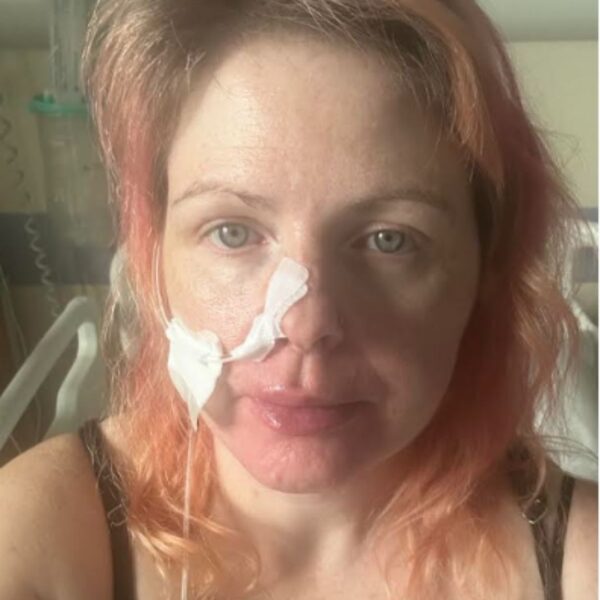 ours respond and to decide whether this treatment path continues.
How did you get involved with Shine?
I found Shine after Googling cancer support groups.
What difference has Shine made to you?
Connecting with Shine has helped me feel less alone. Being surrounded by people who truly understand the emotional and physical toll of cancer has made a huge difference.
How do you feel now about your experiences? What‘s been the biggest change you’ve faced?
My speech has been on a rollercoaster. Two weeks after my first surgery, I developed vocal cord palsy, leaving my voice breathy and strained. I’ve worked incredibly hard with my speech and language therapist to strengthen my tongue and improve clarity. I now have a slight lisp, but I’m proud of how far I’ve come. My confidence – especially at work – has taken a hit, but I’m rebuilding it piece by piece.
If you could give one piece of advice to yourself before your diagnosis, what would it be?
This experience has changed me in ways I’m still discovering. The biggest shift has been recognising my own resilience. If I could speak to myself before all of this, I’d say: You are stronger than you ever thought possible.