
What type of cancer were you diagnosed with, and when?
I was diagnosed in June 2023 with a very rare form of peritoneal cancer called Pseudomyxoma Peritonei, that originated in the appendix. I was 32 at diagnosis, I’m 33 now.
How did you find out you had cancer?
The road to diagnosis was very long and took almost a year. I didn’t have many symptoms and certainly didn’t expect it to be cancer. I suffered with PMDD and had been to the doctors many times with this issue, feeling suicidal at certain times of my cycle but was prescribed antidepressants and sent on my way. In September 2022, I was referred for an ultrasound scan, initially thought to be endometriosis. They spotted cysts on both ovaries, and it was suggested I could have ovarian cancer. A blood test result came back with an extremely high CEA tumour marker of 23 and the normal level range is 0 – 2.5.
This is when I really started to panic, there were many sleepless nights, extreme anxiety and late-night googling sessions (not recommended). I then had an MRI scan and they ruled out ovarian cancer and I was sent for a colonoscopy to look for colorectal cancer instead. Nothing was found and I was eventually told the cysts in my ovaries were benign. I was hugely relieved, but I had a feeling it wasn’t over just yet.
Out of desperation for answers, I underwent a laparoscopy privately as the NHS waiting lists for anything benign were so long and I felt something wasn’t right. And I am so thankful I did, the surgeon saw extensive tumours on the surfaces of my organs and my peritoneum (the lining of the abdomen). He had never seen it before, so I was referred to the gynaeoncology team and eventually to a specialist centre – The Peritoneal Malignancy Institute in Basingstoke.
I had my first appointment in Basingstoke in June 2023, and they finally told me I had cancer and that it had originated in my appendix. They think I had had it for around 5 years.
During my diagnosis period, I had started a new job, moved to a different city and was trying desperately to get on with my life. It ended up being a nightmare as I had to keep driving back and forth for various appointments and sadly, I had to give up my new life and move back to my mum’s house for treatment and recovery.
What did you think and feel when you were diagnosed?
A whole mixture of emotions – I was devastated, angry and absolutely gutted, but I did feel a sense of relief having some answers after such a long-awaited diagnosis. It was, and still is, very hard to get my head around but at least there was now a plan in place going forward. The team in Basingstoke were all so friendly and I felt in safe hands.
One of my main concerns was that they told me they couldn’t save my ovaries. My oncologists said there were risks involved with taking the hormones required to harvest eggs and that they could make the cancer develop faster. As I walked out of that first appointment, I had already decided I wouldn’t freeze my eggs and therefore there would be no option to have biological children in the future. I was extremely upset and felt that life was very unfair.
How did the people around you react?
My mum remained very strong, brave and positive for me; she was there every step of the way. I think she couldn’t quite believe it at first and was devastated as well. It had been two years since my dad had died of cancer too, and both of us couldn’t believe we were going through it again.
I have some amazing friends and other family members who were all extremely supportive too. Sometimes it’s hard to know what to say, but they all did their best to support me in the ways they could and showered me with treats!
What treatment did you have, or are you having?
I had extensive cytoreductive surgery and HIPEC (heated chemotherapy put directly into the abdomen during surgery). The surgery took about 10 hours and they removed my appendix, ovaries, uterus, gallbladder, spleen, part of my liver, omentum and stripped the peritoneum, diaphragm and pelvis and then combined it with heated chemotherapy wash. My belly button was also removed, which is a fun fact to tell people!
How did you feel through treatment?
In the days and weeks after surgery, I was more focused on the physical pain than the emotional pain. I felt dizzy, sick, disorientated and my abdomen felt like it was burning. I have always been quite squeamish about needles and suddenly I had tubes coming out of my stomach draining the chemo back out among many other attachments to my body.
The emotional side of treatment didn’t hit me fully until I came back home and realised, I had lots of parts of me missing. I felt despair, sorrow and shame but the most painful for me has been anger. It’s hard to know what to do with anger and where to direct it in a healthy way. It was no one’s fault, it just happened.
What happened after treatment finished?
Recovery has been very up and down. I have been in and out of hospital a number of times with severe abdominal pain and have had to completely change my diet, unfortunately cutting out some yummy foods. I have also had to navigate a surgical menopause, which has had a huge impact on my mental and physical health.
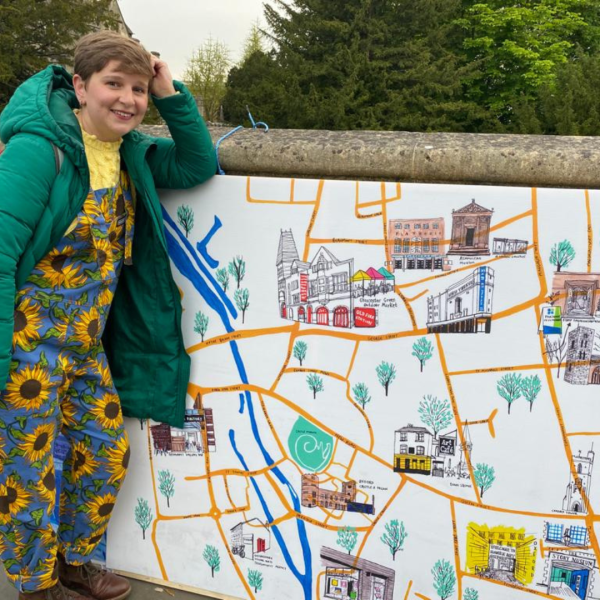
I have recently got a new part-time job teaching art and have been doing some freelance illustration work but I am unable to work full-time as I get too exhausted. I do a lot of personal art projects too, which have helped me to process my feelings.
How did you get involved with Shine?
I heard about Shine through the Maggie’s centre in Oxford and joined the Break Out programme in January 2024. I have also been to a few of the Oxford Shine local network meet-ups.
What difference has Shine made to you?
Shine has been amazing, and I am very grateful for the support and education they give, whether it is emotional or practical. At first, I was a bit apprehensive about joining the Break Out programme, but after the first few sessions, we really started to bond and got on so well. Everyone has been very supportive of one another and it has really helped me feel less alone. We have a WhatsApp group and keep in touch regularly
How do you feel now about your experiences? What‘s been the biggest change you’ve faced?
In many ways, I feel I have grown a lot through this experience and learnt how to express my feelings in a more open, honest and vulnerable way, whether that is in therapy or to friends and family or through my artwork. We are all looking for connection and being more honest can help build stronger connections with others.
The biggest change is having a slower pace of life, giving myself more time to recover than I initially allowed for and trying to be more kind to myself. My idea of what success looks like has changed a lot. I doubled up on my therapy sessions, which has given me more structure to my week and has helped me begin to come to terms with what happened.
If you could give one piece of advice to yourself before your diagnosis, what would it be?
Have more self-compassion and self-love (I’m still working on this). There is a tendency with a cancer diagnosis to blame yourself or think it is your fault in some way, which isn’t true, so I think accepting the randomness of it is the first step to more self-compassion.
Also, to lean on family and friends and let them console and support you. During my diagnosis period, I didn’t tell a lot of friends because I felt ashamed, and I also didn’t know what it was yet. But when I did reach out to them, it was a huge relief and they sent so much love and support back.
You can follow Charlotte on Instagram HERE. You can also read the blog she kindly wrote for us about processing her experiences through her art.

If you’d like to share your own personal experience, please get in touch. We’d love to hear from you!