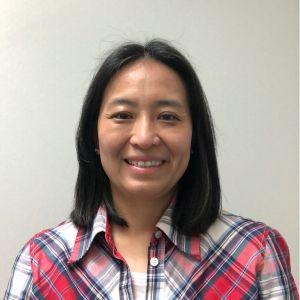
When were you diagnosed and what with?
I was diagnosed in 2020 with stage 4 lung cancer. I was 45 when I was diagnosed, and I’m 50 now.
How did you find out you had cancer?
I had a shadowing in my left lung for a few years but no tests were taken except an x-ray. At the time, the idea that it might be cancer was discarded as I’ve neither been a smoker nor a drinker. I was told that I was young and had nothing to worry about, but was diagnosed with asthma. I was under the chest clinic for two years before they had discharged me from their care. I trusted advice from healthcare professionals.
A few years later, in 2020, I hurt my back and I thought I pulled my back muscle. The following day, I could hardly get out of bed. It took me over 30 minutes to get up as I was in excruciating pain; an intensified pain that I’ve never experienced before.
Eventually, I managed to get to hospital via ambulance. The A&E doctor had read my medical history and referred me to get an x-ray and some scans. Within one week of my back pain starting, a biopsy and CT, PET, and MRI scans were scheduled. The following week, the results confirmed my worst nightmare. I then got the devastating news that it was a stage 4 lung cancer diagnosis and I was referred to The Christie Hospital. From symptoms to prognosis, it all happened in a space of 3 weeks.
What did you think and feel when you were diagnosed?
It was in the height of a global lockdown that I received the shocking news. My whole world turned upside down and I felt so numb, scared, and overwhelmed. I was on my own due to the lockdown.
My first thoughts were “STAGE 4? I’ve always looked after myself and eat well. How could this be? Surely they’ve got my results mixed up with some else.”
There were so many questions and so much uncertainty. My friends and family all tried to provide me with useful information but I was inundated with information and I had to request that everyone back off; I only wanted specific people to contact me.
How did the people around you react?
My family and partner (at the time) were all in shock, disbelief, and in tears. They were very understanding and stood there for me all the time. But they were saddened that I was unable to join them in family gatherings and social events as I was declared as clinically extremely vulnerable by the government.
All my friends have been very encouraging and understanding. They’ve also supported me in many ways.
My line manager and colleagues had all been very supportive and some had corresponded with me straight away via email; some had rung me about the news. Throughout the course of the lockdown, we had set up a chat group to encourage each other and then it slowly dwindled down a couple of colleagues who’d kept in touch with me on a regular basis.
What treatment did you have?
Currently, I am on Osimertinib (Protocol name is called Tagrisso). This is an oral immunotherapy treatment that I take every day. I am also on Denosumab, which is injected into me every 3 months. I also take Ad-Cal (vitamin D and calcium tablet) daily.
I had radiotherapy in 2023 as my treatment was showing signs of becoming less effective. At the time of writing, my current status remains stable.
How are you feeling through treatment?
Whilst I’m on this treatment, there are/were many side effects. For the first 3 years, I had severe painful mouth ulcers (very frequently), very bad flaky dry skin, toilet problems, and weak nails. Since then, the mouth ulcers and flaky skin have subsided for a long while. However, I still have the remaining symptoms, particularly with managing my bowel movements. My stomach has become more sensitive and now I am allergic to the sun. I’m unable to grow my nails and they break or split very easily. I battle fatigue on a daily basis and I’m unsure as to whether this is post-radiotherapy.
I do not have the stamina to walk up a steep hill and I can only manage two flights of stairs at a time. I become very breathless and my breathing becomes very difficult. I used to hike and dance a lot, but I can now only manage a long stroll on flat grounds, or gentle and relaxing workouts. I’m now unable to do any spinning movements or get deep tissue massages.
However, my hair has doubled in volume and thickness, and it looks glossier.
What’s facing you next in terms of treatment?
Currently, there are no other alternative immunotherapy available. I’m just waiting for the next one. However, other potential treatments may be available, such as radiotherapy, chemotherapy, or an alternative therapy in the future.
How did you get involved with Shine?
I first heard about Shine from my counsellor who mentioned it to me at the early stages of my treatment. It was only after 4 years that I decided to get involved in the Shine Circles programme. Why did I take so long? First, I wasn’t ready. Second, I wasn’t sure whether I wanted to join another cancer group, especially knowing that I could potentially lose some friends that I’ve made through the group. Sadly, this has happened within my group; two members have passed away since our programme. Third, I was also trying to protect myself from further hurt and anguish.
I also met some friends through The Christie and Maggie’s Centre last year; one of them happened to be an ambassador for my area and reintroduced me to Shine. The rest is history.
What difference has Shine made to you?
It’s been a wonderful experience to find that there’s still plenty of support for young people with cancer and that we all “get it”. I’ve learned to become less selfish and stop worrying about “what ifs”; rather than wallowing in my own fears, I realised that we all need to support each other. I also attended a funeral online, and found that it had a lovely service with heartwarming messages.
How do you feel now about your experiences? What‘s been the biggest change you’ve faced?
Shine has helped me with overcoming some of my social anxiety. The more we were put in smaller breakout rooms on the programme, the easier it became for me to share my story at a much deeper level. Shine enable me to become more open within my group and share my experiences and my cancer journey. I now have friends who are walking with me on my journey, and I’m walking with them on theirs. I’ve become a much happier person.
We try to meet up online (almost) every month (or when possible). We continue to update each other and have a good rant about life. We share both good and bad news, our treatments, and our snaps from our holidays and retreats. We support each other with our pains and sorrows.
I have plan to visit a friend living abroad at some point in the near future. That may be my first flight abroad since my diagnosis.
During my counselling sessions (through Maggie’s Centre), I had to identify the biggest fear I had (rated out of 10). The thing I deemed impossible, or a big “no way”, was being in a large indoor event without my face mask and sitting through the duration of event. I’ve overcame my biggest fear and achieved this by attending a concert in July 2024. That was a huge milestone for me.
If you could give one piece of advice to yourself before your diagnosis, what would it be?
Why not?? Go for it. Life is too short!!