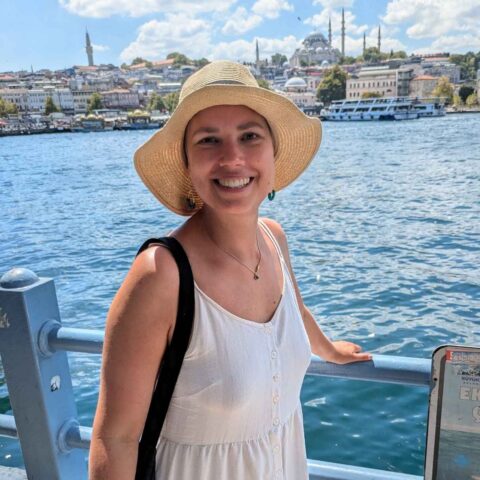
What type of cancer were you diagnosed with, and when?
I was diagnosed with a Sclerosing Rhabdomyosarcoma in October 2023. I was 32 at the time, I am now 33.
How did you find out you had cancer?
In May 2023 I started to notice my left ear felt a bit blocked, this was initially assumed to be an eustachian tube defect following from a cold. Over the next few months the ear remained blocked and I started developing some jaw pain on the same side. I was in my second year of training to be a midwife and in a very busy time period of deadlines and shifts so mostly this was very much in the background and I wasn’t too concerned about it.
 Following a routine dentist appointment that showed no obvious dental issue that could cause the jaw pain, I returned to my GP who then put in my two week wait referral to the local hospital based on notable swelling in my left cheek, the pain and the ear blockage. This is when things started to feel a bit more concerning and serious.
After the referral, things escalated very quickly. I had an urgent MRI after seeing an Ear, Nose and Throat consultant at a local hospital, the MRI showed a large tumour in the back of my jaw. I was referred into the Royal London Hospital immediately and following a series of scans and tests over a weekend spent in A&E, I had an operation to remove the majority of the tumour. A biopsy wasn’t possible so at the point of surgery we didn’t know what the tumour was.
Three weeks post surgery, I returned to see my surgeon who then confirmed the diagnosis. Due to the rarity of the cancer, I was referred to UCLH (University College London Hospital) and the specialist sarcoma team to continue oncology care.
This all happened in the first few weeks of starting my final year as a student midwife, I’d gone from training to be a healthcare professional to being a patient almost overnight and my world turned upside down. Due to the intensity of treatment I had to pause my studies which I have not yet been able to return to due to ongoing treatment.
What did you think and feel when you were diagnosed?
I’ll never forget the walk from the waiting room to the doctor’s clinic. I knew from his demeanour it wasn’t good news. We’d built up a good relationship with him and I knew he was about to tell me something bad, I was with my partner. I find it hard to remember my feelings at this time, fear, I think. My instant response was “how bad is this, can I have wine?”.
My doctor was very honest and said he didn’t know much at all about this cancer which is why I’d be referred to UCLH who are specialists. In hindsight, I’m very glad that at that moment there wasn’t much more he could say as, past someone telling you you have cancer, not much else sinks in.
How did the people around you react?
A lot of shock, I don’t think anyone was expecting this but instantly there was a lot of love and messages of support. I got a lot of reassurance that I have a strong support network around me.
What treatment did you have, or are you having?
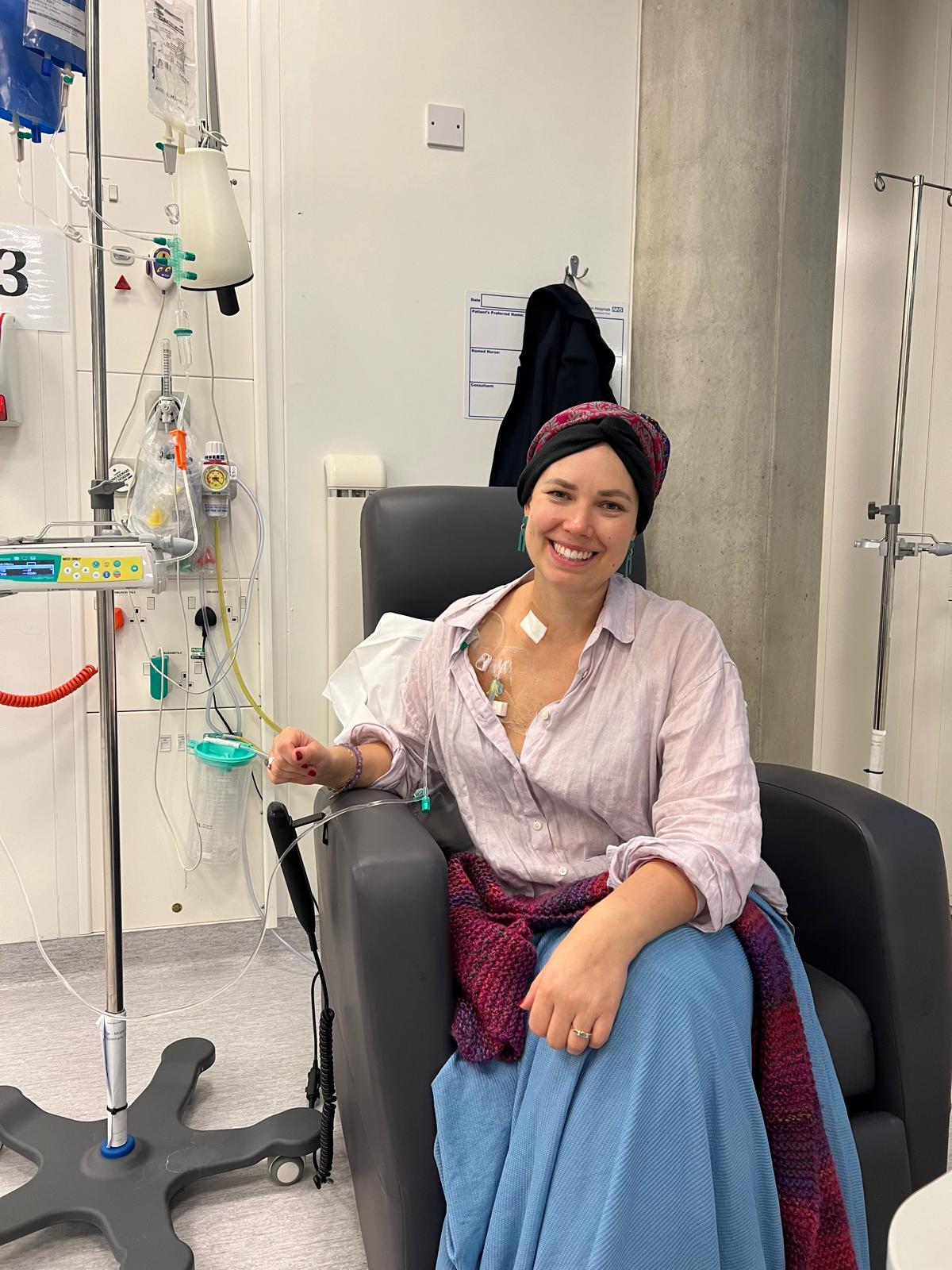 About six weeks post-surgery, I started an intense chemotherapy regime called IVADO, a variety of drugs that I would have over a two day infusion every 21 days for nine cycles, with additional doses of IV chemo on two other days in that cycle. The chemotherapy ended in June 2024.
In February and March 2024 I underwent 28 fractions of high dose radiotherapy alongside the chemotherapy.
Between June-September 2024 I continued on maintenance chemotherapy in tablet form. However, in September 2024 a new tumour had grown which led to an updated diagnosis to stage 4 and my cancer was no longer deemed curable. By the end of October 2024 I was on a new regime of chemotherapy which I am currently still in the middle of.
My new regime of chemotherapy is given over six days every 21 days as an outpatient and is a mixture of tablet and IV chemotherapy medication. There is currently no specific time frame or plan of how many cycles of this regime I will have.
How did/are you feel/ing through treatment?
Post-surgery, I developed ‘first bite syndrome’ (FBS) due to where the surgery had been, which is an extreme nerve pain reaction every time you eat. I also had very limited jaw opening and for the first few days post surgery was on a NG tube for eating. The first bite syndrome continued for about eight months, however the rest of my recovery was quick and relatively fine.
In my initial chemotherapy I was very sick during my treatment, low energy and nausea in the weeks post treatment. I ended up being hospitalised several times due to being neutropenic, having extremely low blood pressure, passing out and some allergic reactions added into the mix.
Radiotherapy was incredibly hard, the process itself I had to have a large mask made for my head and neck region that was then clipped into place for each session, it was incredibly claustrophobic and uncomfortable. The treatment itself caused me to completely lose my taste. I suffered a lot of mouth ulcers and discomfort in my mouth, really affecting my ability to eat and drink. This was probably the hardest part of my treatment both mentally and physically; I was exhausted, ill and really struggling to get good days when simple things like eating are taken away from you.
My first phase of treatment was just a complete whirlwind, it felt like everyday I was in hospital for one thing or another. It was a very intense time period that in parts still feels a bit surreal when I look back at it.
The treatment regime I am on now is much easier to tolerate, so despite being very time consuming, I have far fewer side effects and I’m able to go about daily life in an easier way.
For me, I have had to live with a huge amount of uncertainty since day one. My cancer is very rare which makes having a clearer picture of what the future holds more difficult and it’s mostly a case of living scan to scan and taking it from there.
What’s facing you next in terms of treatment?
I am in the middle of my second line chemotherapy treatment, I have treatment every 21 days and scans every three cycles. There isn’t a defined plan for how many cycles or for how long I will stay on this treatment, the team assesses at each scan point how effective the treatment is, and we make a plan from there.
How did you get involved with Shine?
A few people recommended the charity to me and I started following Shine online and signed up to the newsletters. I attended the full day Shine Shake Up in September this year which was great and I always keep an eye for the London meet-ups ( yet to be able to make it to one due to treatment/illness etc but I very much hope to get to one soon). I am signed up for the Shine Circles programme in April.
What difference has Shine made to you?
There’s such an effort to reach people in this age bracket and confront the very specific challenges we have. It is a bit of a hidden time for serious illness, it’s not what people expect and it feels unrelatable to most people’s lives.
Knowing there’s that connection is really important and that there are people that really care about our experiences helps.
How do you feel now about your experiences? What‘s been the biggest change you’ve faced?
It’s an odd thing to say, but I actually have positive feelings about my experiences. The healthcare professionals I’ve met have made a huge difference to my life. Ultimately, these people are strangers who have decided to really care about other strangers and do their absolute best to help you and there’s something incredibly comforting about that.
I have been overwhelmed with the love and support from people in my life which has been incredible and brings home the importance of connections you’ve made throughout your life, friendships you’ve nurtured and maintained and shows you a reflection of what you mean to other people.
My challenging physical experiences are a little more buried deep down but when I am able to look back on them I do so knowing I am strong and resilient. It gives me a sense that there is little I couldn’t handle now.
Mentally, you have to adapt to an entirely new world but continue living in your previous world, which can be a challenging juxtaposition of normality and complete madness. My outlook in life has always been a mixture of positivity and pragmatism and I would say that’s the approach I have brought to this experience.
I guess the biggest change has been from going from the health worker to the patient, in a pretty extreme way, especially as I was in my training so medical practices were so in the forefront of my brain and my life. One week I was in theatres watching surgery and then suddenly I’m in one being operated on. It was a whirlwind shift of perspective.
If you could give one piece of advice to yourself before your diagnosis, what would it be?
If you have a gut feeling something is wrong, stick with it, see a doctor, put yourself first!
If you’d like to share your own personal experience, please get in touch. We’d love to hear from you!